Thursday, September 2, 2010
Welcome Visitor! | login/logout


Engineering a solution
Email Print
Engineering a solution

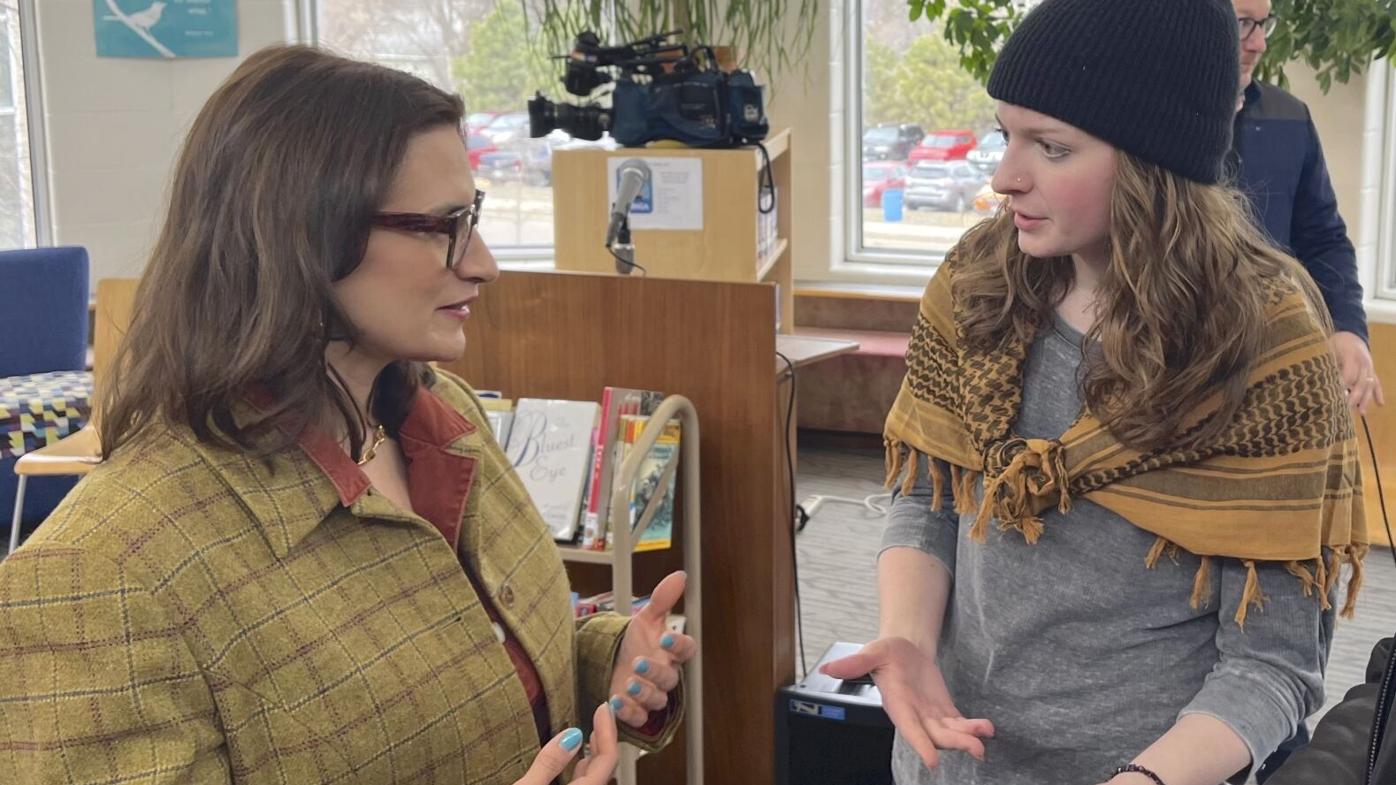
Roosevelt Elementary School fifth-graders Emily Beckmann, Karol Echegaray and Jackie Rindahl, from left, test the carving score of various rocks. The students are part of a field-test for an engineering curriculum designed by the Boston Museum of Science.
Catch them early.

That seems to be part of the theory behind a curriculum designed by the Boston Museum of Science, introducing elementary school students to engineering.

This spring, some Faribault students are part of the national field test, now in its fifth year.

Comprised of students in the talented and gifted program, as well as some who are teacher-recommended, the engineering group is led by Kimberly Meirose.

“Not many people know just what an engineer does,” admitted Maija Sedzielarz, who works with the school visit programs at the Science Museum of Minnesota. She is helping coordinate the field tests for the Boston facility, and spent Tuesday at Roosevelt Elementary in Faribault.

“I don’t often get to see the kid-part,” Sedzielarz smiled. “I usually work with the teachers. This project is not just for students, but for teachers and educators, too. And the kids think it’s cool.”

The curriculum takes on additional importance with the changing state science education standards — recently revamped to include engineering.

Indeed, none of the students in a small group were familiar with the field before their engineering group formed.

“I’d heard of it, but I didn’t know what it meant,” said Karol Echegaray.

What they’re learning, said Sedzielarz, is “a new use of the word technology. Now, they think of computers and cell phones and iPods. But technology is anything humans design to help them solve a problem. That opens things up.”

Perhaps the most difficult part of the lesson is realizing there may be multiple correct answers.

“But that’s the thing; you see different kids with different strengths,” she said. “They learn there are many right answers, because there’s always trade-offs.”

The curriculum is aligned with the science units the students are studying in their regular classroom, Sedzielarz said. “We’re not teaching science, but reinforcing the technical aspect of it.”

Each unit in the curriculum begins with a story in which a child character engineers a solution to the problem. The group at Roosevelt was tasked — along with the character — with creating a replica of a petroglyph for a museum. The replica needed to be as close to the original as possible, and meet as many engineering criteria as possible.

The students tested several types of rocks — expanding on their recent unit about rocks — scoring each for its hardness, material formation, carving, durability and shipping.

Throughout the process, the students must use the five steps of the engineering design process: ask, imagine, plan, create and improve.

“We all pretty much agreed that alabaster will probably be the best material,” said Peter Bostwick. “It’s easy to carve into, but you can’t really deface it, so it’s durable.”

In addition, the group said, shipping costs wouldn’t be as high because the rock isn’t as heavy as the marble and granite, by comparison.

“Some of the rocks are just impractical,” said Emily Beckmann, drawing nods from her peers.

“Something you need to remember is to look at your data,” Sedzielarz reminded them, “and not what you already know. That can change your decision.”

The unit isn’t complete; still to be analyzed is the best means and route of shipping.

The hope, she said, is real-world application.

“They can look at real projects from around the world,” Sedzielarz said. “Maybe they can help find simple, inexpensive ways to provide clean water.”


— Staff writer Kay Fate may be reached at 333-3128.
Share: 

Guidelines: Welcome to the Faribault Daily News community. Please keep your comments civil. Don't attack other readers personally and keep your language decent. If you would like to report abuse click here to notify us.
 
Member Opinions:
By: MrCLM on 4/29/10
Great to see Faribault Schools getting some good publicity for their higher level students. It seems that these exceptional students often are forgotten about in the mess that is No Child Left Behind and all the other programs for ESL and slower students. Credit to their teacher for acquiring this curriculum for our students as my understanding is that very few schools have gotten to try out this program. Hopefully it will spur these students on to bigger and better things!

 
Login and voice your opinion!  


Video

Photo Galleries

I35 Marketplace Home

Featured Business:
Top Jobs | Top Homes | Top Cars 
There are no current ads for this category